Rigs
Catfish Rigs for Beginners
Two rigs cover almost every situation you'll fish. Here's which one to use, when, and the mistake that quietly costs beginners bites without them realising it.
Most people overcomplicate rigs, or use the same one everywhere regardless of conditions. In reality, it comes down to one question: is the spot snaggy or not? That decides everything.
Rig 1: The Sliding Rig (For Snaggy Water)
When you're fishing somewhere with a lot of snags — timber, rocks, structure — this is the rig to use. The weight slides directly onto your leader line, with a 5/0 or 6/0 circle hook tied on below using 75–80cm of hook line, and 80lb braid.
The reason this setup works in snaggy conditions: because the weight is directly on the mainline, it usually slides past or over structure rather than wedging into it. You'll lose fewer rigs here than with any other setup.
Rig 2: The Dropper Rig (Preferred, When Snags Aren't a Problem)
This is the better rig overall — it just doesn't hold up as well around heavy snags. Use it in rivers with a calmer stream, or in dams, shallow or deep. It works in both.
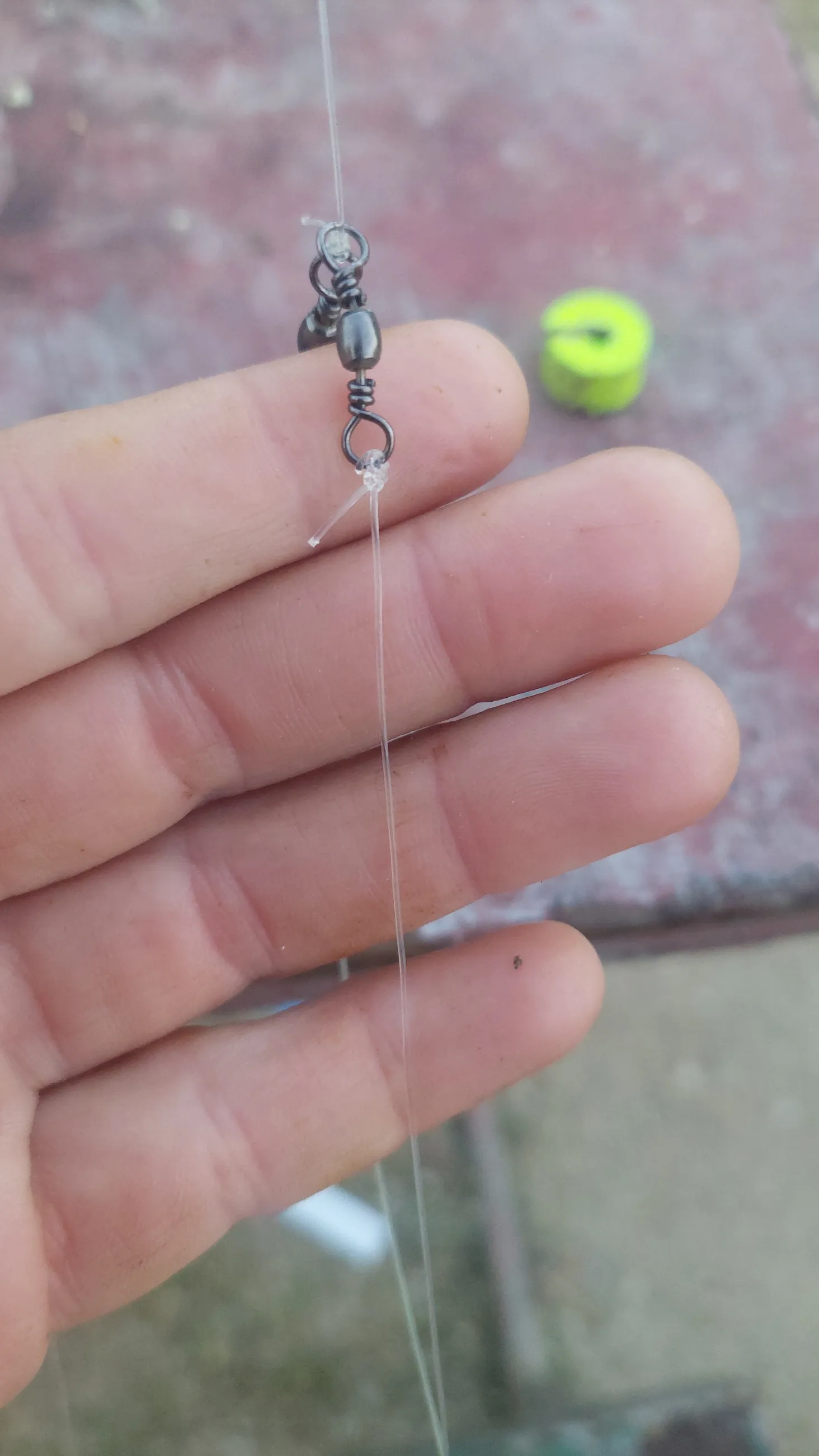
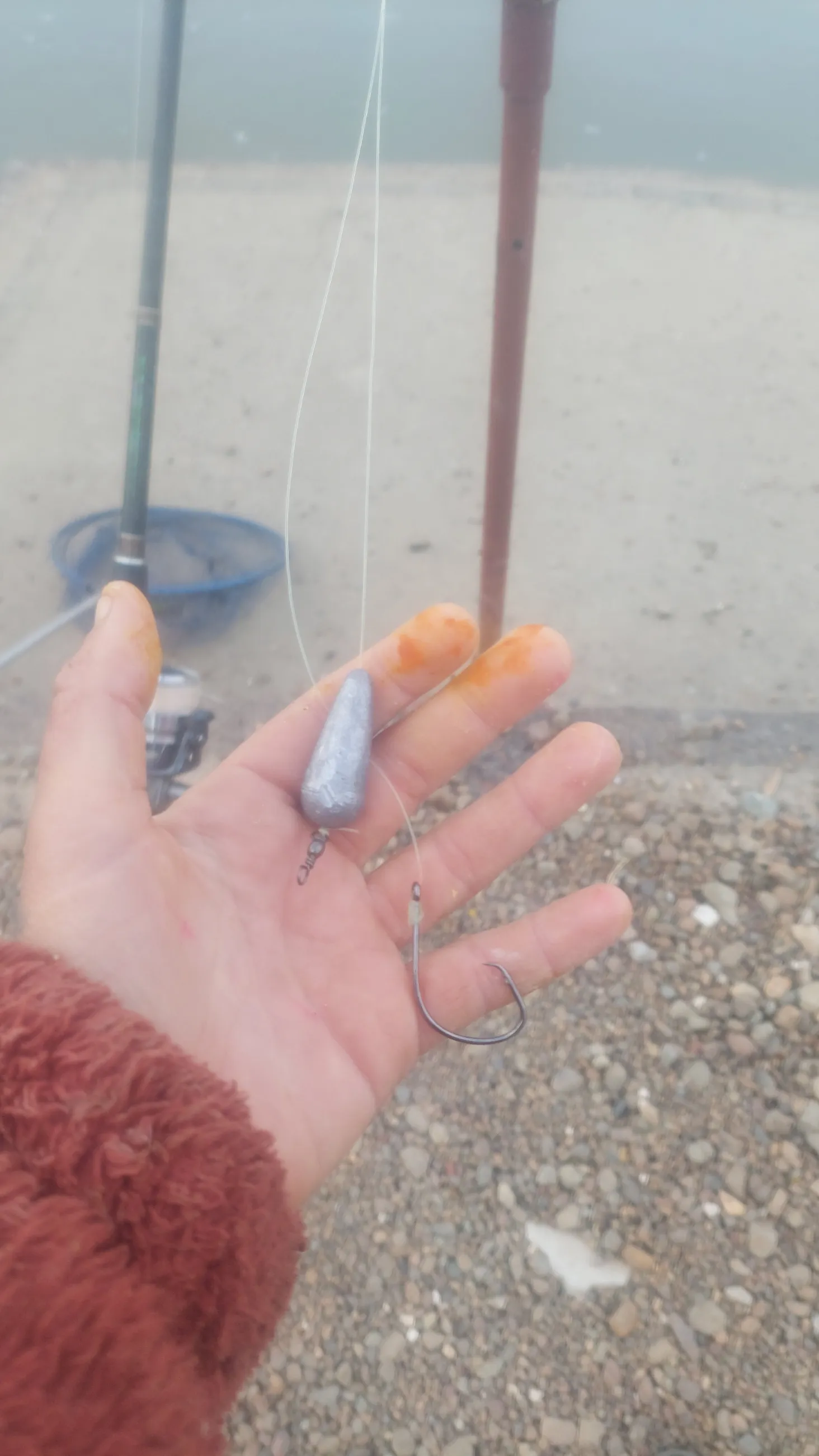
The setup:
- Weight line: 70cm, slides onto your leader line
- Hook line: 75cm, tied to your leader line with a palomar knot
- Hook: same 5/0–6/0 circle hook
The weight and hook are separated onto two different lines instead of sitting in a straight line — that gap is the whole point.
The Mistake That Costs Beginners Bites
Beginners commonly use a straight rig — weight directly above the hook, no separation at all. It looks simple, and it feels like it should work. It doesn't, not well.
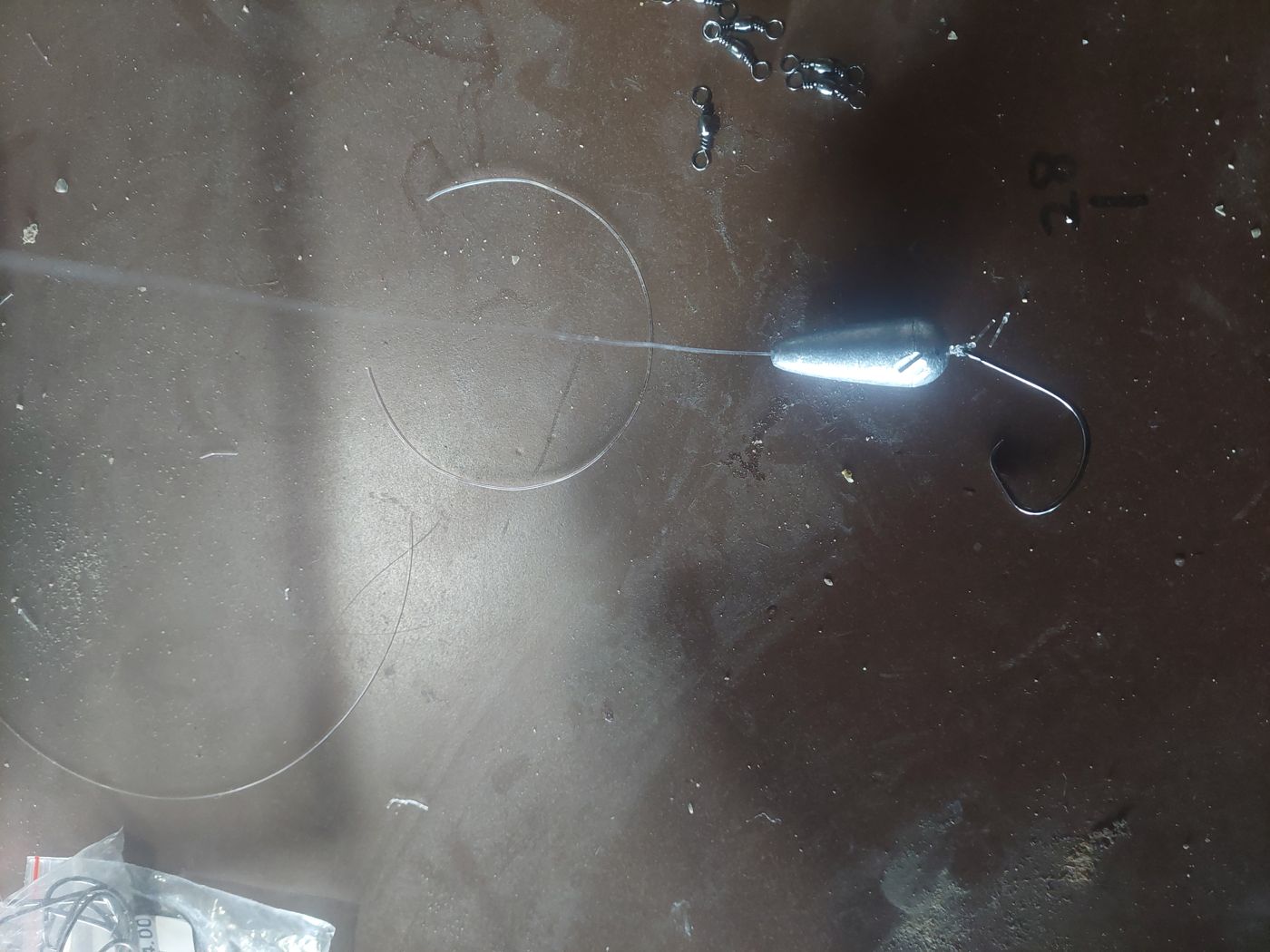
With no space between the hook and the weight, the catfish feels the full pressure of that weight the moment it takes the bait. That pressure puts the fish off — the rod tip goes up and down, up and down, and it won't commit to a positive bite. You want the opposite: as little resistance as possible, so the fish barely feels anything when it picks up the bait. That's exactly what the dropper rig's 70cm/75cm separation gives you — breathing room.
Which One Should You Tie?
- Heavy snags, timber, structure: sliding rig
- Calm rivers, dams, shallow or deep: dropper rig — this is the one to default to whenever conditions allow
Want the full system?
Rigs are one piece of the puzzle. The free Catfish Quick-Start Guide covers bait, timing, and the mistakes that cost most beginners their trip. If you're ready to go deeper, the Ultimate Catfish Guide breaks down the complete approach: rigs, seasonal patterns, and dam-specific tactics.
Get the Free Guide Get the Ultimate Guide