Bait & Rigs
Best Catfish Baits for South African Dams
If you've spent a few trips throwing the wrong bait at the wrong holes, you already know catfish don't reward guesswork. Here's what actually works.
Catfish are bottom feeders with a sharp sense of smell, and in South African dams they respond best to a small handful of baits — not the long list you'll find on generic fishing sites.
1. Crab (Whole)
A whole crab is one of the most effective baits you can put out for catfish in dam systems. The scent draws them from a distance, and the tougher shell means it holds up on the hook through long soak times — useful if you're setting rods and waiting through a slow bite window.
Best for: overnight sessions where you're not recasting often.
2. Crab Rings
Crab rings — the leg and claw sections — are a lighter, easier-to-cast alternative to a whole crab. They release scent quickly, which makes them a strong choice when you want a faster response rather than a long soak.
Best for: active sessions where you're checking and recasting lines regularly.
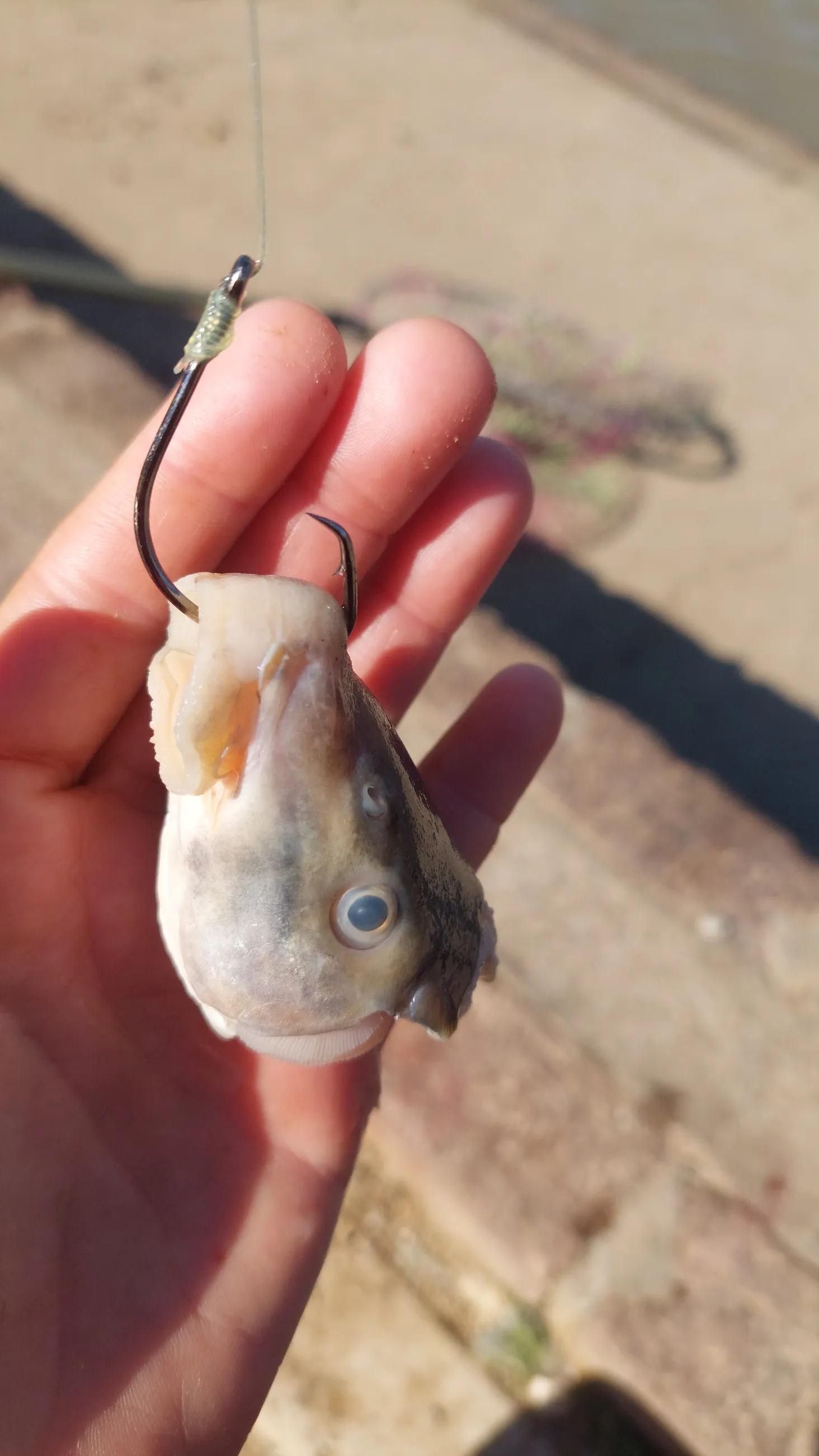
3. Fish Heads
Fish heads are a classic catfish bait for a reason — high oil content, strong scent, and they stay on the hook well. If you're catching smaller bait fish on-site, heads are often the first thing worth cutting off and using.
Best for: dams with an oily or fatty local baitfish species.
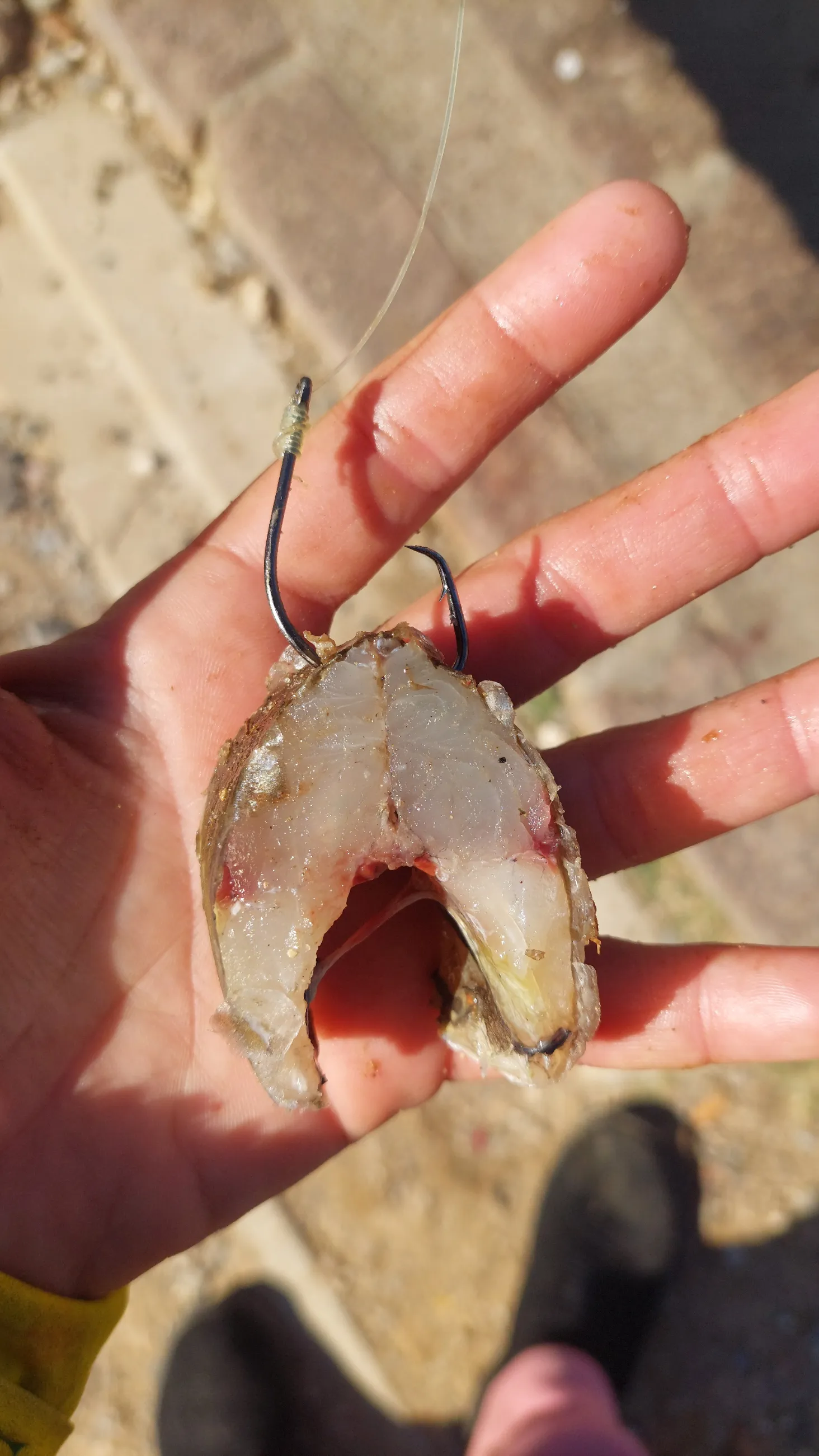
4. Fish Chunks
Cut into rough 3–5cm pieces, fish chunks give you a strong scent trail without needing a full head or fillet. They're a good middle-ground option — easy to carry in bulk, easy to rebait quickly.
Best for: when you're fishing multiple rods and want to rebait fast.
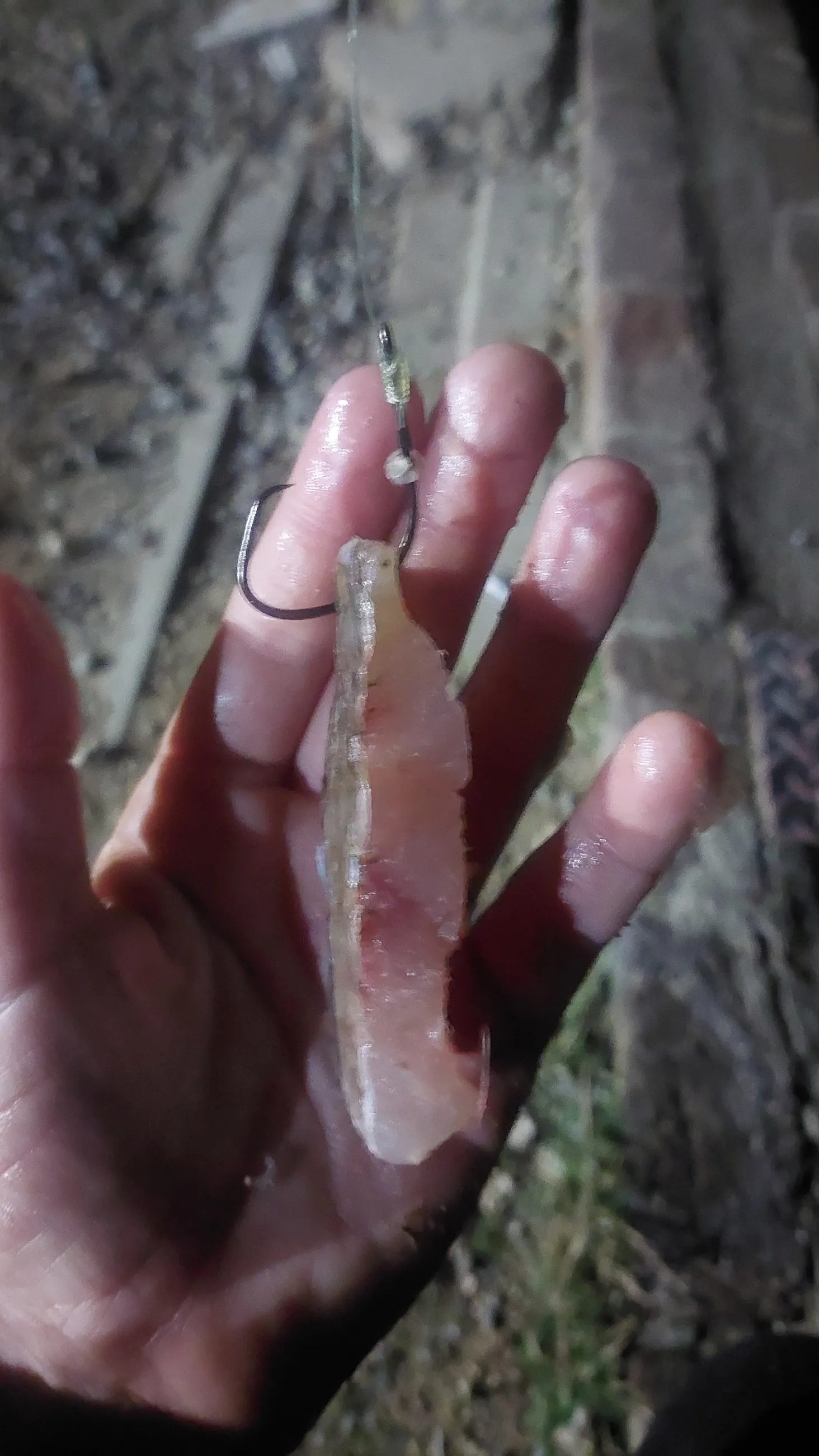
5. Fish Fillets
A fresh fillet strip works well when you want a bait that moves slightly in the current, adding visual movement on top of scent. Not as long-lasting as a head or chunk, but effective in the first hour after casting.
Best for: the early bite window, when catfish are actively hunting rather than scavenging.
How to Rig It
Whatever bait you choose, a simple running sinker rig gets it in front of catfish without spooking them:
This setup lets a catfish pick up the bait and move off with it before feeling resistance — which means fewer missed bites.
When to Fish These Baits
Bait choice matters, but timing decides whether anything's actually feeding. In most South African dams, catfish are most active:
- 6PM – 1AM — the evening/night bite
- 5/6AM – 10AM — the early morning bite
- During stretches of stable barometric pressure
Fishing the right bait during the wrong window will still leave you disappointed. Match bait to timing, not just to habit.
A Mistake Worth Avoiding
Bigger isn't always better. It's tempting to load up a hook with a huge chunk of bait thinking it'll attract a bigger fish — in practice, oversized bait often puts fish off rather than drawing them in. A well-presented, appropriately sized piece of crab or fish outperforms a hook buried in bait almost every time.
Want the full system?
This article covers bait — but bait is only one piece. The free Catfish Quick-Start Guide covers rigs, timing, and the mistakes that cost most beginners their trip. If you're ready to go deeper, the Ultimate Catfish Guide breaks down the complete approach: rigs, seasonal patterns, and dam-specific tactics.
Get the Free Guide Get the Ultimate Guide